Policy & RESEARCH

Capitol Ideas

CSG Knowledge Center

Information Helpline

MLC Policy Resolutions

Question of the Month

Stateline Midwest

States Perform

policy


CSG energy policy resources »


Energy


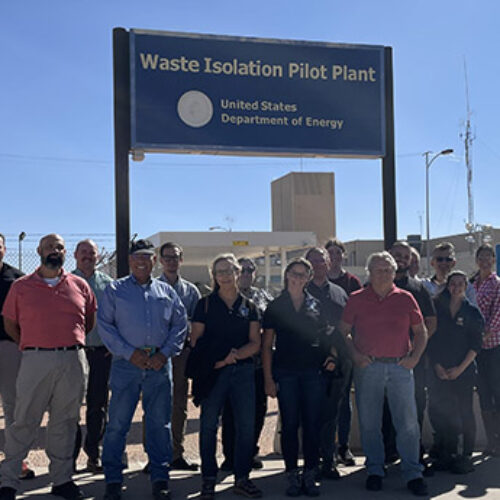
Proposed federal legislation calls for nuclear waste from shutdown plants to have new home
by 2021

by Lisa Janairo ~ May 2013 ~ Stateline Midwest »
Proposed legislation released on April 25 could pave the way toward solving a lingering problem for the nation’s nuclear energy industry — what to do with the waste. More »


Controversial changes to Wisconsin mining law approved; groundbreaking bill on fracking introduced in Illinois

by Tim Anderson ~ April 2013 ~ Stateline Midwest »
The potential of a new "underground economy" in the Midwest is leading to various new proposals that pose important economic and environmental questions. Recent examples include contentious iron ore mining legislation in Wisconsin and a new fracking bill in Illinois. More »


Midwest's wind, natural gas resources integral to U.S. becoming energy self-sufficient

by Ilene Grossman ~ January 2013 ~ Stateline Midwest »
By 2020, the United States is projected to become the largest oil producer in the world, and by 2035, the nation could be nearly energy self-sufficient. More »


Minnesota ranked as Midwest's leader in energy efficiency

by Ilene Grossman ~ November 2012 ~ Stateline Midwest »
When it comes to promoting energy efficiency, Minnesota ranks highest in the Midwest, thanks in large part to the state’s strong efficiency standards and the conservation plans that it requires of utilities, according to a national scorecard released in October. More »


Court ruling on spent nuclear fuel forces U.S. to reassess storage rules, environmental impact

by Ilene Grossman ~ October 2012 ~ Stateline Midwest »
In the Prairie Island Indian Community, some residents live as close as 600 yards from a facility storing highly radioactive spent fuel from a nearly 40-year-old nuclear power plant. The southeast Minnesota community has unwillingly become what state Public Utilities Commissioner David Boyd calls a “de facto storage site” for nuclear waste. And it is not alone. More »


Pressure to waive or change ethanol mandate grows due to drought, high corn prices

by Tim Anderson ~ September 2012 ~ Stateline Midwest »
The long-simmering fuel vs. food debate has reached a boiling point, as the result of drought conditions that have raised corn prices and precipitated requests for the EPA to adjust the federal Renewable Fuels Standard. More »


Energy interdependence between U.S., Canada will play major role in both countries’ future

by Ilene Grossman ~ Stateline Midwest »
Canada is the largest supplier of energy to the United States, providing 9 percent of this country’s energy needs — more than Saudi Arabia and Venezuela combined. These statistics, and other information related to bilateral energy trade, were the focus of a joint meeting this summer of the MLC’s Energy and Midwest-Canada Relations committees. More »


How many states in the Midwest have adopted renewable portfolio standards, and how far along are the states in meeting them?

by Ilene Grossman ~ July/August 2012 ~ Question of the Month » 
In the Midwest, 10 of 11 states — all but Nebraska — have passed a renewable or alternative energy portfolio standard or voluntary goal. More »


Slew of state legislation surfaces in Midwest in response to rise in fracking activity

by Ilene Grossman ~ May 2012 ~ PDF of Stateline Midwest article »
Hydraulic fracturing, or fracking, holds the promise of increasing energy production, growing local economies and bolstering state tax revenues. But it also raises questions about the role of states in regulating operations, safeguarding water resources, and protecting landowners and communities. More »


New EPA emissions rules causing some of region's older power plants to shut down

by Ilene Grossman ~ April 2012 ~ Stateline Midwest »
New rules by the U.S. Environmental Protection Agency that limit emissions from power plants have already had one effect: Some of the Midwest’s older coal-fired facilities are shutting down. More »


5 Great Lakes states join forces to work on offshore wind energy policies


by Tim Anderson ~ April 2012

Five Great Lakes states have signed a memorandum of understanding with one another and the federal government to work more closely on offshore wind energy projects. More »


Blue Ribbon Commission sets new path for nuclear waste policy

by Lisa Janairo ~ March 2012 ~ Stateline Midwest »
After two years of study, the Blue Ribbon Commission on America’s Nuclear Future has issued its final recommendations for a new strategy for managing the nation’s high-level radioactive waste. Progress on the study had been closely monitored by two CSG Midwest committees, both of which have worked to provide state officials in the region with a voice on the future direction of U.S. policy. More »


Putting power in states’ hands: Compact aims to improve process for siting transmission lines

by Ilene Grossman ~ March 2012 ~ Stateline Midwest »
Many states in the Midwest are increasing their production of electricity, often through the development of wind energy, and power companies are looking to export that excess electricity to other states. To do this, though, additional transmission capacity is needed. More »


Midwest is full of promising second-generation biofuels

by Ilene Grossman ~ January 2012 ~ Stateline Midwest »
The benefits of using biomass residuals — the byproducts from activities such as agriculture and forestry — as an energy source are clear for the Midwest. And states are in a position to help advance the production and use of second-generation biofuels, according to the author of a new regional study. More »


Decision on oil pipeline runs through Midwest: Nebraska shows role for states in project that aims to boost U.S. use of Canadian oil

by Ilene Grossman ~ December 2011 ~ PDF of Stateline Midwest article »
TransCanada has faced many hurdles in its multi-year effort to get a new 1,700-mile oil pipeline built.
But this fall, the energy infrastructure company ran up against perhaps its stiffest opposition yet — from concerned residents and lawmakers in the state of Nebraska. More »


Questions about future of fracking reaching Midwest’s capitols


by Tim Anderson ~ December 2011 ~ Stateline Midwest »
With the practice of hyrdaulic fracturing, or “fracking,” on the rise, state lawmakers are increasingly being asked to weigh in on a process that boosts oil and gas production but also raises environmental concerns.
In North Dakota, the General Assembly has voiced its support for this method of extracting more oil and natural gas from the ground. Earlier this year, lawmakers passed legislation (HB 1216) designating fracking as “an acceptable recovery process” and adopted a resolution (HCR 3008) urging the U.S. Congress to delegate regulatory responsibility to the states. Then, during a special legislative session in November, legislators set aside $1 million for a potential lawsuit against the U.S. Environmental Protection Agency if it attempts to regulate fracking. According to The Bismarck Tribune, fracking is now widely used in parts of North Dakota. It involves the pressurized injection of water and chemical additives into a geologic formation. Environmental concerns center on its potential impact on drinking water and groundwater; the EPA is now conducting a major research study on the issue.
Meanwhile, in states such as Michigan (HB 5150) and Ohio (SB 213), bills have been introduced over the past few months to prohibit fracking until research on the environmental risks can be completed.


Bright idea? Illinois OKs $3 billion plan to build out smart grid

by Tim Anderson ~ November 2011 ~ Stateline Midwest

By overriding a gubernatorial veto in October, the Illinois General Assembly has paved the way for a 10-year, $3 billion investment in the state’s energy infrastructure.
The plan, as laid out in SB 1652, is for the state’s utilities to build out a “smart grid” that employs digital, interactive technologies to improve system reliability, reduce the frequency of outages and improve power restoration. In addition, smart meters will be installed in homes and businesses to help consumers track and manage their energy use.
According to the Chicago Tribune, multiple concerns were raised about SB 1652 as it advanced through the legislature: higher bills for ratepayers, a loosening of state oversight of the utilities, and a new formula determining the utilities’ annual profits. In response, the legislature passed a “trailer bill” to SB 1652.
That measure (HB 3036) reduces utility companies’ return on their investments, protects low-income residents from rate hikes, and requires that more than 2,500 statewide jobs be created at the peak of build-out of the smart grid. Utilities will face penalties for not meeting the jobs mandate, as well as for not improving performance and reliability.
Gov. Pat Quinn, though, still opposed SB 1652, saying it would result in “blockbuster annual rate hikes for consumers and businesses.”


Manitoba's hydro power has states looking north to meet energy needs

by Tim Anderson ~ November 2011 ~ Stateline Midwest
In the early 1960s, the first electricity transmission connection between Manitoba and North Dakota was completed. It is a cross-border energy partnership still going and growing 50 years later, and for some in the upper Midwest, the abundant supply of hydroelectric power being produced in Manitoba is more attractive
than ever. More »


Study shows states in Midwest meeting new efficiency standards

by Ilene Grossman ~ October 2011 ~ Stateline Midwest
Over the last few years, one trend in state energy policy has been to establish new efficiency standards and goals. Those plans appear to be working, the American Council for an Energy-Efficient Economy concludes in a recent report. More »


Expanding wind energy capacity keeps Midwest in U.S. lead

by Ilene Grossman ~ September 2011 ~ Stateline Midwest
The Midwest continues to develop wind energy capacity at an impressive rate. According to a recent report by the American Wind Energy Associaton (AWEA), every state in the region is expanding its installed wind capacity, with Indiana seeing triple-digit growth in the last two years. More »


Nuclear energy: Disaster in Japan, new federal recommendations put renewed focus on key source of energy for region

by Lisa Janairo ~ MLC Annual Meeting Edition 2011 ~ Stateline Midwest
After a “methodical and systematic review” lasting nearly four months, a special task force of the U.S. Nuclear Regulatory Commission has concluded that the nation’s nuclear plants “do not pose an imminent risk to public health and safety.”

The NRC organized the task force in the aftermath of the disaster at the Fukushima nuclear plant in Japan.
The work of the task force was watched closely by state policymakers and regulators in the Midwest, home to 30 operating nuclear power plants located in eight different states. More »


Saskatchewan's carbon-capture plan adds to list of regional projects using clean-coal process

by Ilene Grossman ~ July/August 2011 ~ Stateline Midwest
The government of Saskatchewan is moving forward with an integrated carbon capture and storage demonstration project that it says is “among the first commercial-scale [CCS] facilities in the
world." More »


How much Canadian oil and gas are imported into the Midwest?

by Ilene Grossman ~ July-August 2011 ~ Question of the Month
The U.S. is a net energy importer in terms of oil and gas trade with Canada. Canada’s energy exports to the United States were valued at $76 billion in 2009, while U.S. exports to Canada were valued at $11.5 billion. Canada provides 21 percent of U.S. crude oil imports (nearly 2.5 million barrels a day) and 87 percent of U.S. natural gas imports.  More »