Policy & RESEARCH

Capitol Ideas

CSG Knowledge Center

Information Helpline

MLC Policy Resolutions

Question of the Month

Stateline Midwest

States Perform

policy


Midwest Interstate Passenger Rail Commission »


Transportation & Passenger Rail


Illinois legislature OKs ban on drivers’ use of hand-held cell phones

by Tim Anderson ~ June 2013 ~ Stateline Midwest »
Illinois lawmakers passed a bill in late May to make their state the first in the Midwest to ban the use of hand-held cell phones while driving. Chicago and some other municipalities had already outlawed the use of cell phones without a hands-free device. Illinois’ ban, though, has only applied to school and construction zones.
According to the Springfield State-Journal Register, a $75 fine would be levied for a first offense. Some lawmakers objected to singling out one type of distracted driving, while leaving other types untouched under state law. However, HB 1247 passed the House and Senate with comfortable margins of support.

According to the Governors Highway Safety Administration, 11 states already have general bans on drivers’ use of hand-held cell phones. In the Midwest, though, these restrictions have only applied to young or inexperienced drivers. Every state in the region except South Dakota has a text-messaging ban that applies to all drivers. In Iowa, Nebraska and Ohio, the violation is a secondary offense — officers may cite a driver for text messaging only if another traffic offense occurred. Text messaging is a primary offense in seven Midwestern states. When states have banned the use of hand-held cell phones, they have made it a primary offense.


In Iowa, license renewal now less frequent, and more convenient

by Tim Anderson ~ June 2013 ~ Stateline Midwest »
Two changes in Iowa’s driver’s license laws will be welcome news to many of the state’s motorists: Renew your license less frequently, and from the comfort of your home. HF 355, signed into law in May, allows eligible drivers to renew their licenses online. Eligibility will be determined by the Iowa Department of Transportation.
In the Midwest, Illinois, Indiana, Iowa, Nebraska and Michigan already offer electronic renewal. In South Dakota, as the result of legislation passed earlier this year (SB 45), drivers will have one of two options starting next year: renewals by mail or via the Internet. States that provide the online option still require in-person renewals — typically every other renewal period.
Along with the convenience factor for motorists, Iowa lawmakers say, electronic renewals will save the state an estimated $1.2 million a year. A second bill signed into law, SF 224, will make driver’s licenses valid for eight years for Iowans between the ages of 18 and 74. Licenses previously had to be renewed every five years. In most other Midwestern states, the renewal period is between four and six years, according to the Insurance Institute for Highway Safety. The lone exception is Wisconsin, which had already made licenses valid for eight years.


With new federal dollars, states upgrading region’s intercity passenger rail lines

by Laura Kliewer ~ May 2013 ~ Stateline Midwest »
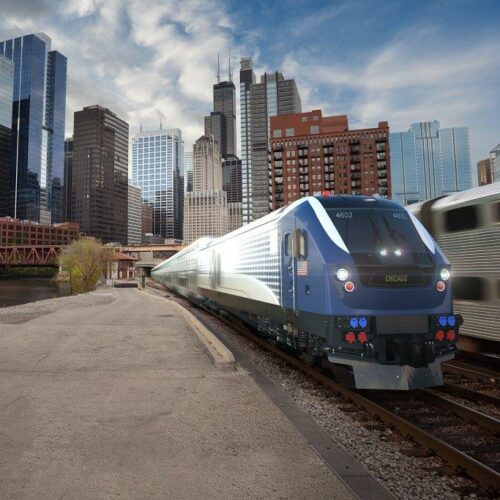
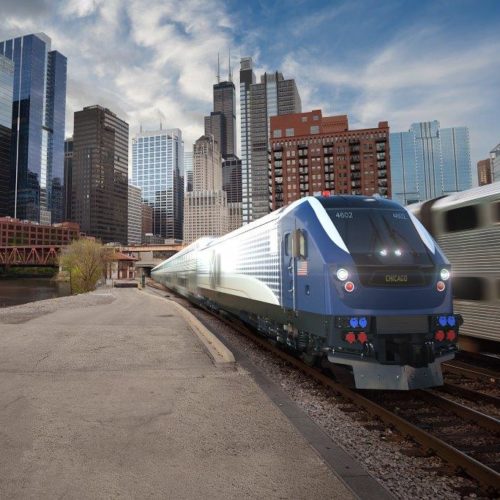
Four years ago, federal lawmakers made a historic funding commitment to passenger rail — billions of dollars for new equipment and projects to improve intercity and interstate service. The Midwest has received $2.5 billion of the money obligated so far under the High Speed Intercity Passenger Rail Program (a little more than a quarter of total federal funding) for close to 40 projects. More »


Ohio leverages tolls on Turnpike to pay for transportation projects

by Tim Anderson ~ April 2013 ~ Stateline Midwest »
Looking to increase the state’s investment in transportation but limited by traditional revenue options, Ohio lawmakers have turned to another source: toll money collected on the Ohio Turnpike. HB 51 was passed by the legislature and signed by Republican Gov. John Kasich in March.
Under the new law, $1.5 billion in bonds will be issued and backed by future toll revenue. Under the new law, the Cleveland Plain Dealer reports, 90 percent of the proceeds from the bond issuance must be spent on projects within 75 miles of the Turnpike. Tolls will not be increased for Turnpike trips of 30 miles or less. Plans to bolster transportation funding have been introduced in several other states. Examples include an Iowa measure to phase in a 10-cent increase in the gas tax; a proposal by Michigan Republican Gov. Rick Snyder to increase gas taxes and vehicle registration fees; and a Minnesota bill to raise gas taxes and registration fees and to expand the sales tax to include vehicle repairs and service.
In recent years, too, the Kansas and Nebraska legislatures have chosen to dedicate more sales tax revenue to transportation-infrastructure projects.


Prospect of automated vehicles drives new proposal in Michigan

by Tim Anderson ~ March 2013 ~ Stateline Midwest »

Early in the last century, Michigan emerged as the global hub of automotive production. Could it become the center of testing for a new vehicle for this century — the driverless car? SB 169 takes a first step in making that at least a possibility. It would allow the testing of automated vehicles on Michigan roadways through the use of a special “manufacturer” license plate.
Republican Gov. Rick Snyder called for passage of the legislation earlier this year, noting that three other states (none in the Midwest) had already enacted automated-driving laws. The bill was introduced in February. State officials have said that automated cars could reduce traffic accidents and improve fuel efficiency. They add that Michigan has an economic stake in keeping development of the technology inside the state.
Michigan’s reliance on the automobile industry is well known, but a 2010 Center For Automobile Research study underscores the importance of this economic sector to much of the Midwest. The study’s authors found that the auto industry contributed to 21.8 percent of the labor force in Michigan, 13.9 percent in Indiana and 12.4 percent in Ohio — the three highest rates in the nation. Illinois and Wisconsin were also above the U.S. average.


Under new Illinois law, iimmigrants have chance to obtain driver’s license

by Tim Anderson ~ February 2013 ~ Stateline Midwest »
Illinois has become the first state in the Midwest to create a path for unauthorized immigrants to obtain a driver’s license. Proponents of SB 987, signed into law in January, lauded it as a measure that would improve traffic safety and provide greater employment opportunities for the state’s population of unauthorized immigrants – estimated by the Pew Research Hispanic Center to be 525,000.
According to the office of Democratic Gov. Pat Quinn, unlicensed drivers are five times as likely to be involved in a fatal crash as are licensed drivers. In addition, Quinn says, getting more drivers licensed and insured will cut insurance premiums for Illinois motorists. Under the new law, individuals will be eligible for a license if they pass a driving test and carry auto insurance. The new license (which will have a different appearance than a regular driver’s license) cannot be used as official identification.
According to the Chicago Tribune, critics of SB 957 have said it will lead to fraud and abuse, and had sought language requiring that applicants for the new license be fingerprinted.


Passenger rail ridership continues to rise in Midwest

by Laura Kliewer ~ December 2012 ~ Stateline Midwest »
Passenger rail service in the Midwest is growing and improving, with record numbers of people taking the train and upgrades to service under way. More »


Nebraska DUI law key to rise in use of interlock ignition devices

by Tim Anderson ~ October 2012 ~ Stateline Midwest »
A new Nebraska law is dramatically changing how DUI offenses are handled, the Lincoln Journal Star reports, with the use of interlock ignition devices on pace to increase by 20 percent in 2012.
The state is using the term “No Interlock, No Keys” to describe how the system works under LB 667, which took effect in January. Individuals arrested for a first or second time on charges of driving under the influence can apply for an ignition interlock permit. Their car is then equipped with this device, and won’t start unless the driver records a breath-alcohol concentration level of under .03. The advantage of this option for DUI offenders is that they continue to have driving privileges. Nebraska’s number of license-revocation hearings, meanwhile, has declined due to the number of arrestees choosing the interlock option. This trend, in turn, is saving law enforcement time and money.

According to the Governors Highway Safety Association, Nebraska, Illinois and Kansas are among the 17 U.S. states that require or highly incentivize the use of interlock devices in all DUI convictions. Michigan, Minnesota and Wisconsin only require the devices in certain cases (repeat offenders and/or those who recorded a high blood-alcohol content level). In other states, discretion is given to local judges.


As REAL ID deadline nears, Iowa OKs plan for new licenses, ID cards

by Tim Anderson ~ October 2012 ~ Stateline Midwest »
Iowa will issue driver’s licenses and state identification cards next year that meet the initial security standards set out under the federal government’s REAL ID program. According to the Quad City Times, all new driver’s license applicants will be given Iowa’s new cards. Individuals with existing licenses will not have to make the switch.
The U.S. Department of Homeland Security has given states until Jan. 15 to be “materially compliant” with new security standards developed as a result of the REAL ID Act of 2005. Eighteen benchmarks are being used to evaluate the security of state driver’s licenses and ID cards. After Jan. 15, individuals with non-compliant licenses and ID cards will have to provide alternative documents or undergo additional screening at the nation’s airports and federal facilities.
According to the Coalition for a Secure Driver’s License, as of July 31, five states in the Midwest were materially compliant with all 18 benchmarks: Indiana, Iowa, Kansas, Ohio and South Dakota. In addition, Michigan is offering “enhanced” licenses and ID cards that may be deemed acceptable by the Department of Homeland Security. Illinois was the only state in the Midwest meeting 10 or fewer benchmarks, the coalition reports.


North Dakota lawmakers say speeding drivers should pay higher cost

by Tim Anderson ~ September 2012 ~ Stateline Midwest »
If a driver in North Dakota gets stopped by police for driving 65 miles per hour in a 55-mph zone, he or she leaves the scene with a $10 fine. That amount is too low, an interim legislative committee has decided, as are many of the state’s penalties for speeding.
According to The Bismarck Tribune, the committee is backing a plan to increase many highway speeding fines by double or more. For example, the penalty for the aforementioned violation would rise from $10 to $50. During committee hearings, proponents of making these changes said North Dakota’s fines were no longer serving as an effective deterrent. The proposed changes will be taken up by the legislature in 2013.
According to the U.S. Department of Transportation’s 2011 “Summary of State Speed Laws,” North Dakota’s fines for speeding fall between $5 and $100, depending on how fast the motorist was driving over the speed limit. This type of “fee scheduling” is common in state statutes — for example, speeding fines range from $60 to $625 in Iowa, $10 to $300 in Nebraska, and $30 to $300 in Wisconsin. Indiana, Kansas and South Dakota cap speeding fines at $500, Illinois at $1,000, and Ohio at $150. Conversely, Michigan’s statutory language sets minimum fine amounts — between $10 and $50.


Signing of interlocal agreement paves way for international bridge

by Ilene Grossman ~ July/August 2012 ~ Stateline Midwest »
After two years of seeking options and legislative support to build a new bridge between Detroit and Windsor, Michigan Republican Gov. Rick Snyder appears to have found a way to make it a reality. More »


Advocates look to turn around recent trends in rail funding

by Laura Kliewer ~ May 2012 ~ Stateline Midwest »
After two years of minimal investments in passenger rail, advocates of improving the region’s intercity and interstate rail system are hoping to convince the U.S. Congress to reverse this recent course in federal
funding. More »


Michigan removes helmet requirement for motorcyclists

by Tim Anderson ~ May 2012 ~ Stateline Midwest »
Michigan has repealed a state law requiring all motorcyclists to wear helmets, leaving Nebraska as the lone state in the Midwest with such a law on the books. According to the Insurance Institute for Highway Safety, most state laws in this region only require that helmets be worn by riders who are 17 years old and younger. (Illinois and Iowa are the only two states in the Midwest — two of only three nationally — with no helmet requirements for any ages.)
Michigan’s new law allows people 21 and older to ride without a helmet, but these individuals must also meet specific requirements. These riders have to pass a safety course, the Detroit Free Press reports, as well as carry $20,000 in medical insurance. Nationwide, 19 U.S. states have laws requiring all motorcyclists to wear helmets. Michigan had been among this list of states until the governor’s signature of SB 291 in April. Efforts to repeal the helmet law date back decades; former Gov. Jennifer Granholm twice vetoed measures passed by the Legislature.
In 2010, there were a total of 818 motorcyclist fatalities in the 11-state Midwest, ranging from a low of 14 in Nebraska to a high of 170 in Ohio. Sixty-three percent of those fatalities involved unhelmeted riders.


For states, no clear path on transportation: Proposed gas-tax hikes reflect ongoing struggle to fix infrastructure and funding shortfalls

by Laura Kliewer ~ March 2012 ~ PDF of Stateline Midwest article »
In Michigan, lawmakers say an additional $1.4 billion a year is needed for the state’s roads and bridges.
An Iowa study released in late 2011 found that the state needed to generate $215 million more annually “to meet the state’s critical roadway needs.” The two states are not alone. More »


Special issue of CSG's Capitol Ideas magazine on transportation »


Glimpse of the future? First high-speed train running in Midwest


by Tim Anderson ~ March 2012 ~ Stateline Midwest »
When passengers boarded a train in February from Chicago to Kalamazoo, Mich., they became a part of history — the first-ever high-speed rail service in the Midwest. More »


Rural areas on road to infrastructure crisis

by Carolyn Orr ~ January 2012 ~ PDF of Stateline Midwest article »
Most rural Midwesterners are well aware that their roads and bridges, designed primarily from the 1930s through the 1960s, are now handling loads and traffic that the original builders could not have imagined. More »


What states in the Midwest have graduated driver’s license laws, and what are the differences and similarities in these laws?

by Laura Kliewer ~ December 2011 ~ Question of the Month »
A. According to the National Transportation Safety Board, traffic crashes are the leading cause of death for teenagers, and multiple studies have shown that graduated driver’s license (GDL) laws are effective in improving teen driving safety. Under these laws, a state imposes restrictions on young drivers until they gain more experience behind the wheel. More »


Cameras to target speeders on roads near parks, schools

by Tim Anderson ~ December 2011 ~ Stateline Midwest »
Illinois lawmakers have paved the way for speed cameras to be used in designated safety zones in the city of Chicago. SB 965, passed by the legislature in November, establishes these zones as being roadways within one-eighth of a mile of a school or park. An individual will be ticketed if he or she is caught by a camera driving more than 5 miles per hour over the speed limit. The fine is $50 a day for driving up to 10 mph over the limit and $100 for higher speeds. The cameras will be used between 6 a.m. and 10 p.m., and signs must be posted at the intersections warning motorists.
According to the Chicago Tribune, a pedestrian study done by the city of Chicago served as the impetus for the legislation. Between 2005 and 2009, the study found, there were 861 crashes involving children near schools around arrival or dismissal times.
Most states in the Midwest do not have laws addressing the use of speed or red-light cameras. According to the Governors Highway Safety Association, Wisconsin is the only state in the region with a law that expressly prohibits the use of automated enforcement technologies. Illinois, on the other hand, already allows local municipalities to employ red-light cameras. In Iowa and Ohio, automated enforcement programs are operating under local ordinance.


Ridership on Midwestern corridors continues uptrend, rising 54 percent in past five years

by Laura Kliewer ~ November 2011 ~ Stateline Midwest »
Passenger rail ridership on state-supported and other shorter-distance corridors (less than 750 miles) in the Midwest continues to grow. The number of riders on these nine routes increased by 5.4 percent in fiscal year 2011, reaching nearly 3 million for the period between Oct. 1, 2010, and Sept. 30 of this year. More »


Transportation finance: With cut in federal dollars looming, states mull value of public-private partnerships

by Sean Slone ~ MLC Annual Meeting Edition ~ Stateline Midwest »
The possibility of reduced federal transportation funding and the potential of public-private partnerships as a tool for infrastructure development were two issues on the minds of participants in a roundtable discussion held during this summer’s Midwestern Legislative Conference Annual Meeting in Indianapolis.

Indiana Republican Rep. Ed Soliday, who led the discussion, said a plan put forward by U.S. House Transportation and Infrastructure Committee Chairman John Mica puts the future funding challenges for states in sharp
focus. More »


Nebraska plans to re-route part of sales tax for highways

July/August 2011 ~ Stateline Midwest »
Nebraska will soon add another dedicated revenue source for maintaining, repairing and building roads — the sales tax.
Under LB 84, signed into law in May, a 0.25% sales tax for roads will take effect in 2013. According to the Unicameral Update (a publication of the Nebraska Legislature), the state’s overall sales tax rate of 5.5 percent will remain unchanged, but instead of all proceeds going to the general fund, some will be diverted to two highway funds.
Last year, Kansas legislators increased the sales tax rate (from 5.3 percent to 6.3 percent) and dedicated more money from this revenue source to transportation. Traditionally, states have relied primarily on two revenue sources for financing highway projects: federal funds (nationally, they make up 25.5 percent of the total) and user fees, such as gas taxes, tolls and motor vehicle taxes. In 2009, user fees accounted for a majority of own-source state revenue for highways in every Midwestern state — from a high of 96.8 percent in North Dakota to a low of 54.5 percent in Kansas, according to Federal Highway Administration statistics.
Seven Midwestern states used bond proceeds as well, the federal data show; Iowa, Nebraska, North Dakota and South Dakota were among the 15 U.S. states that did not.


Pew study: Put performance-based transportation funding on fast track

by Tim Anderson ~ June 2011 ~ Stateline Midwest »
Transportation is one of the “big four” when it comes to spending in state government. Along with K-12 education, Medicaid and higher education, roads and other infrastructure needs take up a majority of states’ budgets every year. (The big four account for 61 percent of total state spending, National Association of State Budget Officers data show, with transportation making up 7.8 percent of the total.)  More »


How are state-supported passenger rail routes funded?

by Laura Kliewer ~ June 2011 ~ Question of the Month »
Today’s system of state-supported passenger rail is based on the federal legislation passed in 1970 that created Amtrak. That measure allowed states to request additional passenger rail service if they agreed to pay a portion of the costs.  More »


One plate or two? States vary in what is required on vehicles

February 2011 ~ Stateline Midwest »
Most states in the Midwest require vehicle owners to display license plates in the front and the back of their passenger cars or trucks.
Many of these two-plate requirements date back years or decades. But are they worth it? That question is being asked in at least two Midwestern states, where bills have been introduced to change existing vehicle codes.
House bills 164 and 188 would make Illinois the region’s fourth “one-plate state,” meaning only one license plate would be issued and placed in the rear of the vehicle. The bills’ supporters told The Bloomington-Normal Pantagraph that the change would save the state 50 cents per plate, which amounts to just under $800,000 a year. Officials with the Illinois State Police, though, have expressed concern that the move might make it more difficult to identify stolen cars and to nab offenders.
Indiana, Kansas and Michigan are among the 19 U.S. states that require only one plate, according to Java Signs, a sign manufacturer. Last year, a one-plate proposal in Nebraska failed to get through the Legislature.
A bill in that state this year (LB 182) would exempt farm trucks and commercial vehicles from the two-plate requirement. One complaint among some agriculture producers in Nebraska is that their front license plates often get damaged and need to be replaced, resulting in an extra cost.


No turning back on use of red-light cameras in Illinois

January 2011 ~ Stateline Midwest »
The controversial use of red-light cameras by some local governments in Illinois will continue in 2011, but under a new set of rules established by the General Assembly. SB 935 took effect in January. It makes several changes to a state law — the only one of its kind in the Midwest — that explicitly permits the use of cameras to enforce traffic laws at stop lights. (Illinois also allows for automated enforcement in some construction zones and at railroad crossings.)
As a result of passage of SB 935, a violation caught by a red-light camera must be reviewed and verified by law enforcement. Motorists, too, have the right to review video evidence and contest violations via a secure, web-based portal. In addition, local governments are required to post the locations of red-light cameras on their websites and to study the safety impact of each camera. According to the Chicago Tribune, the cameras appear to be working: Preliminary data show a decline in accidents at intersections where they have been installed.
Nine of the 11 Midwestern states have no laws on automated enforcement. However, it is used in parts of Iowa, Ohio and South Dakota, the Governors Highway Safety Association reports. According to the GHSA, Wisconsin is the only Midwestern state that explicitly prohibits the use of speed and red-light cameras.